
Solutions
uPVC Windows & Doors
82mm uPVC profile systems delivering thermal performance, acoustic comfort, and low-maintenance operation for residential and light commercial projects.
Overview
Practical Performance in an 82mm uPVC Profile
uPVC (unplasticized polyvinyl chloride) has established itself as one of the most widely used window and door frame materials globally — and for good reasons. It does not corrode, does not require periodic painting or staining, and its molecular structure does not conduct heat the way unbroken metal does. When combined with high-quality insulated glazing, a well-engineered uPVC system can contribute meaningfully to a building's energy envelope.
Our uPVC offering is built around the VEKA SOFTLINE 82 — an 82mm PVC-U profile system from one of Europe's leading uPVC manufacturers. The 82mm depth provides sufficient structural cross-section to support insulated glazing units up to 52mm thick, enabling genuine high-performance glazing combinations rather than being limited to thinner, lower-performing units.
EPDM or TPE gaskets seal the perimeter of each sash and glass rebate, providing reliable weather resistance across the system's full range of configurations. The profile is available in white as standard, and in woodgrain foil laminates and solid colors — making it adaptable to the appearance requirements of period properties, contemporary new construction, and everything in between.
The SOFTLINE 82 system covers a comprehensive range of window and door types within a single profile family: casement, tilt-and-turn, fixed, French windows, movable-mullion, parallel sliding and tilt, swing windows, front entry doors, and multi-part assemblies. This breadth of configuration within one system simplifies sourcing and installation across a whole-house or whole-building project.
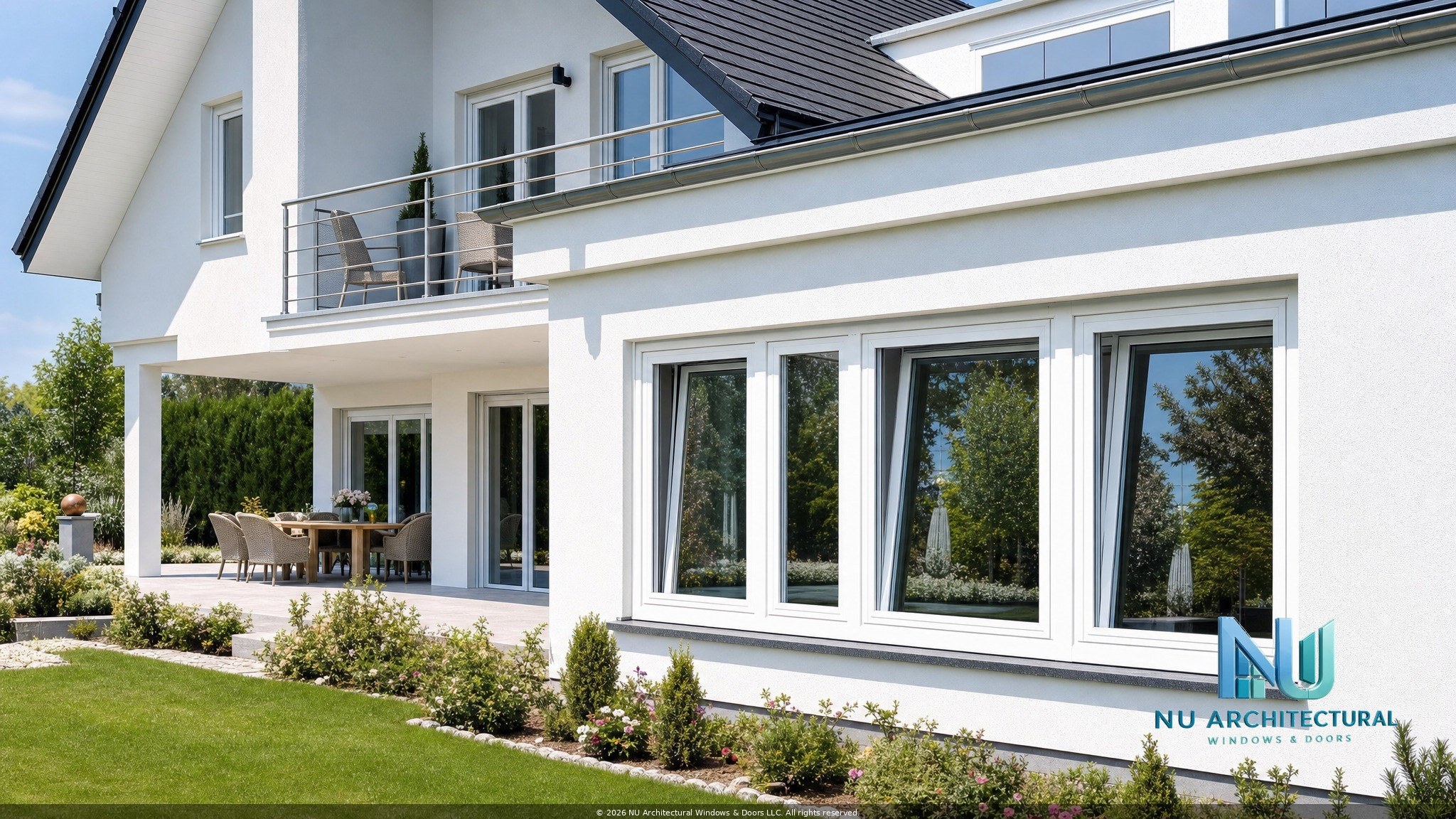
Key System Data (SOFTLINE 82)
- Profile depth: 82mm
- Material: PVC-U (uPVC)
- Glazing: up to 52mm IGUs
- Sealing: EPDM or TPE gaskets
- Finishes: White, woodgrain laminate, solid colors
- Manufacturer: VEKA
Material Considerations
uPVC vs. Aluminum — A Fair Comparison
Both uPVC and aluminum are excellent window and door frame materials. The right choice depends on your project's priorities.
Where uPVC Has Advantages
- PVC-U profiles do not require routine repainting under normal conditions — uPVC holds its color through its material structure, not a surface coating. Periodic cleaning and maintenance of hardware and seals is still recommended.
- Corrosion-resistant profiles — PVC-U profiles do not corrode. Hardware, fasteners, reinforcement, anchors, and adjacent materials should be selected and maintained for the project exposure.
- Inherent thermal properties — uPVC does not conduct heat the way unbroken metal does, contributing to the thermal performance of the frame itself.
- Generally lower initial cost for standard residential configurations.
- Well-suited to traditional and heritage contexts — woodgrain finishes provide a convincing timber aesthetic without the upkeep.
Where Aluminum Has Advantages
- Narrower sightlines — aluminum's structural strength allows slimmer profiles for a given glazed area.
- More contemporary aesthetic — the slim, sharp-edged profiles typical of aluminum suit modern minimalist architecture.
- Greater dimensional stability at extremes of temperature — aluminum expands and contracts less than uPVC over large temperature swings.
- Better for very large units — aluminum's structural rigidity is preferred for large-format fixed glazing and wide door leaves.
- More finish flexibility — virtually unlimited RAL powder coat options versus a more limited uPVC laminate palette.
Not sure which is right for your project? Contact us to discuss your specific requirements, or read our Aluminum vs. uPVC guide.
Available Types
uPVC Configuration Options
The SOFTLINE 82 profile family covers a comprehensive range of window and door types — allowing a whole-building uPVC specification from a single system.
Casement
Side-hung casement windows — the most widely used configuration, available in single and double sash arrangements.
Tilt-and-Turn
Dual-function inward-opening sash: tilt for background ventilation, turn for full casement opening. Easy interior cleaning.
Fixed Panel
Non-opening fixed-light panels within the same profile family as opening windows.
French Windows
Double-leaf French windows for a traditional look with wide openings.
Movable Mullion
Central mullion that can be removed for a clear full-width opening when both sashes are open.
Parallel Sliding / Tilt
Space-efficient sliding and tilt options for applications where casement swing space is limited.
Parallel Sliding and Tilt
Multi-panel parallel sliding and tilt for wide opening access.
Swing Window
Top-hung or pivot swing window for specific ventilation geometries.
Front Entry Door
uPVC front entry door configuration with hardware and security options.
Multi-Part Assembly
Combined fixed and opening units assembled into larger window-wall configurations.
Underlying System
VEKA SOFTLINE 82
Our uPVC offering is built on the VEKA SOFTLINE 82 — an 82mm uPVC profile system from VEKA. The system page contains full technical specifications, configuration options, and important notes on thermal performance data interpretation.
View SOFTLINE 82 SpecificationsStart Your Project
Explore uPVC for Your Project
Tell us about your project's opening types, dimensions, performance goals, and budget range and we'll help identify the right uPVC configuration for each position.